Recipe
Ingredients:
- 150g active sourdough starter (75g whole wheat + 75g water)
- 775g all-purpose flour
- 75g whole wheat flour
- 575g warm water
- 15g salt
- pinch dry yeast (optional)
- Combine 775g AP flour with 75g whole wheat flour. Mix with 575g warm water so that all flour is hydrated and a shaggy dough is formed.
- Autolyse (rest) for 30-60 minutes.
- Massage 150g active starter onto the dough, along with 15g salt and pinch of yeast. Pinch and fold until completely mixed in.
- Bulk fermentation for 5 hours. For the first 2 hours, every thirty minutes, fold the dough and form into a ball.
- After 5 hours, dough should almost double in size. Divide and shape the dough into two balls. Wrap them and place in the fridge overnight.
- Whenever you are ready, take dough out of the fridge and begin shaping into a pizza crust.
- Preheat oven to highest temperature (I do 525 F). Best results with a pizza stone. (Allow the stone to heat up for at least 30 minutes)
- Top with your favorite toppings, and bake for 8-10 minutes. Check occasionally so you it doesn’t burn. The bottom should be golden and crispy.
Thoughts
Is there a food that is more perfect than pizza? It is conceptually simple. Bread. Sauce. Cheese. Maybe some other toppings. Yet how can it be so delicious? I like to say that there is no such thing as a bad free pizza. Because at the end of the day, you are still eating pizza.
The Voyager Golden Records consists of a collection of music, images, and sounds. All of which give the essence of humanity. These records were launched off in the Voyager spacecrafts, perhaps one day to be discovered by extraterrestrial life. The beauty of math, languages, and art. All that is beautiful in the world is there. Except for one thing. There is a notable lack of pizza on this record. I mean, if there was one thing I would want to share with life outside of Earth, it would be the glory that is pizza. Truly a wasted opportunity to share our crowning human achievement. The ultimate pinnacle of life, the Universe, and Everything. Pizza.
Whether you go to Little Caesars, or that one New York pizza place that you don’t know the name of but still think about to this day, you will notice this major difference. The crust. It is the foundation for which all magic happens. A crumbling foundation only leads to disappointment. In this post, I give my sourdough pizza recipe. It has changed throughout the years, through trial and error. While I am always experimenting, this is my best version.
Here is what you will need to make it:
- Sourdough Starter
- Whole Wheat Flour
- All-Purpose Flour
- Water
- Salt
- Dry Yeast
- Large Bowl
Activate the Starter
You will need to activate your sourdough starter. If you do not have one, this recipe is not for you. However, it is a worthwhile investment that you can make with only flour and water. King Arthur Flour has a good “recipe.” I only use mine about once a week, so I store it in the fridge. Make sure to take it out a day before you want to feed it, so that it has a chance to warm up.
- In order to feed it, mix 75g whole wheat flour with 75g warm water. Combine in your preexisting starter. This is what it should look like:
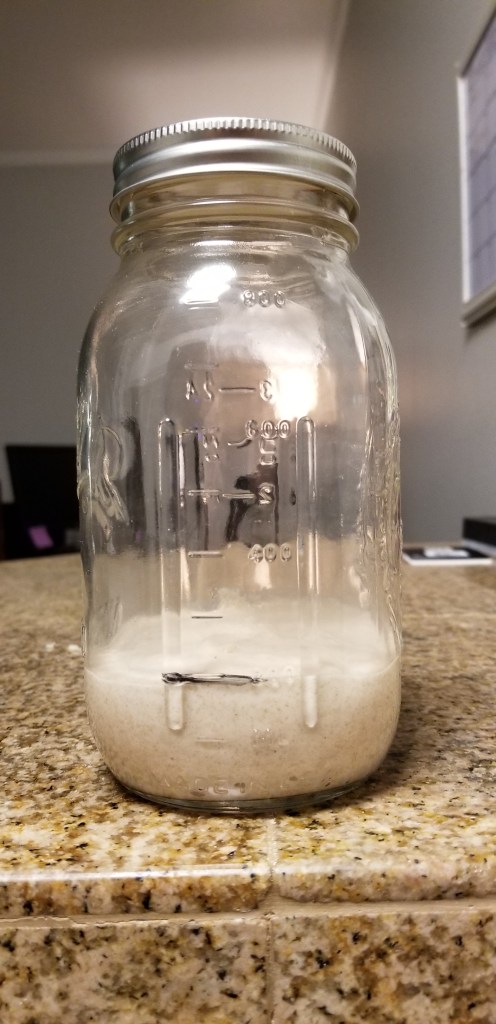
2. After 8 hours, it looked like this. Since I did it overnight, I did not catch it at its peak. You can see the line on the jar where it peaked. You are looking for it to more than double in size.
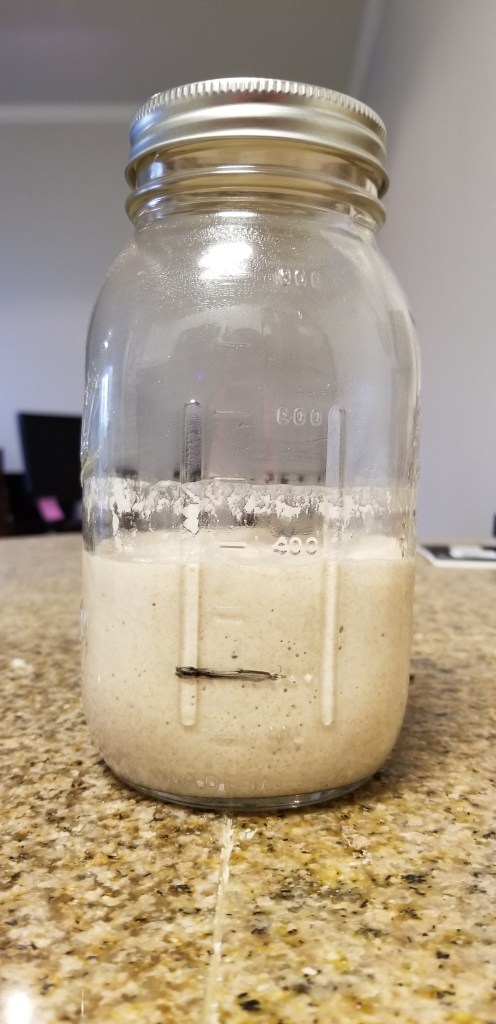
It should be bubbly and have a yeasty aroma. If you are unsure if it is ready, you can do the float test. Simply get a bowl of water, scoop a spoonful of the starter and place it in the water. If it floats, it’s ready!
Combine Flour and Water
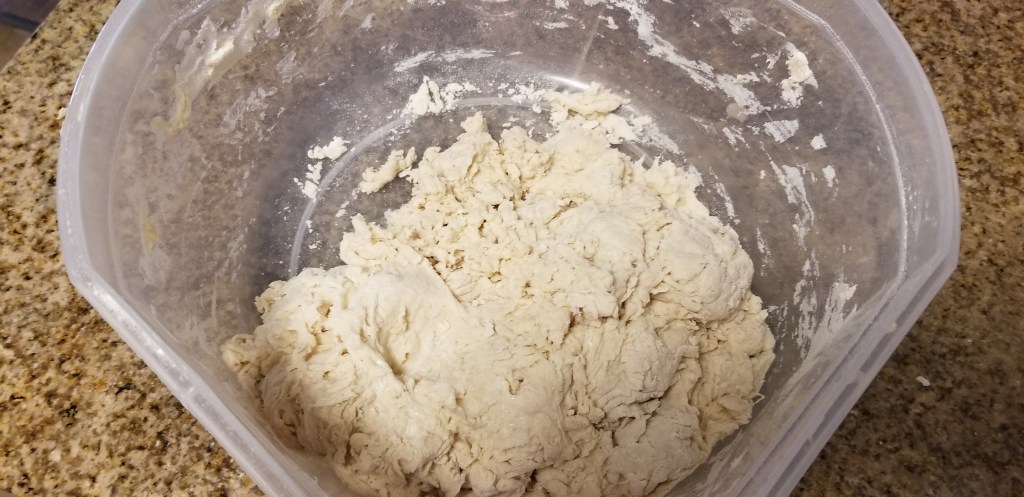
Now that the starter is ready, it is time to combine our flour and water. As with most bread recipes, this is simple. Mix 75g whole wheat flour with 775g all-purpose flour. For a total of 850g of flour (that’s some good math right there). Then measure out 575g of warm water. Pour it in the flour, and mix until it is a shaggy dough. You should not knead it yet, just make sure all flour is hydrated. It should look like this:
Autolyse Time
Now the magic happens. This is when you do one of the most important steps…nothing. Once all flour and water is combined, you have the moral obligation to autolyse. That’s right. Cover the bowl and let the dough rest for 30-60 minutes. Without getting into too much of the science, this step is important because it does a few things:
- It helps break down the protein from the flour, allowing the dough to rise more easily.
- It turns the starch from the flour into sugar, giving much-needed food for the yeast from our started.
At the end of autolyzing, the dough will look different. The flour is more hydrated than before, which is important.
Combine Yeast and Salt
In a small bowl, measure out 15g of salt, and a pinch of dry yeast. The dry yeast is optional, but I use it to kick-start fermentation. Salt is an important ingredient in dough. While it is “only” 15g, it serves a crucial role in the development of our dough. Salt does a couple things:
- It strengthens the gluten structure, allowing the dough to retain more carbon dioxide released from the yeast. This results in a more voluminous dough.
- It retards the fermentation process. A longer fermentation gives a more complex flavor. Both under- and over-salted dough will struggle to rise, for different reasons.
- Salt makes things taste good!
Now measure out 150g of your active sourdough starter. Pour it on the top of the dough, and massage it in. Use your hands, don’t be afraid to get a little wet and wild.
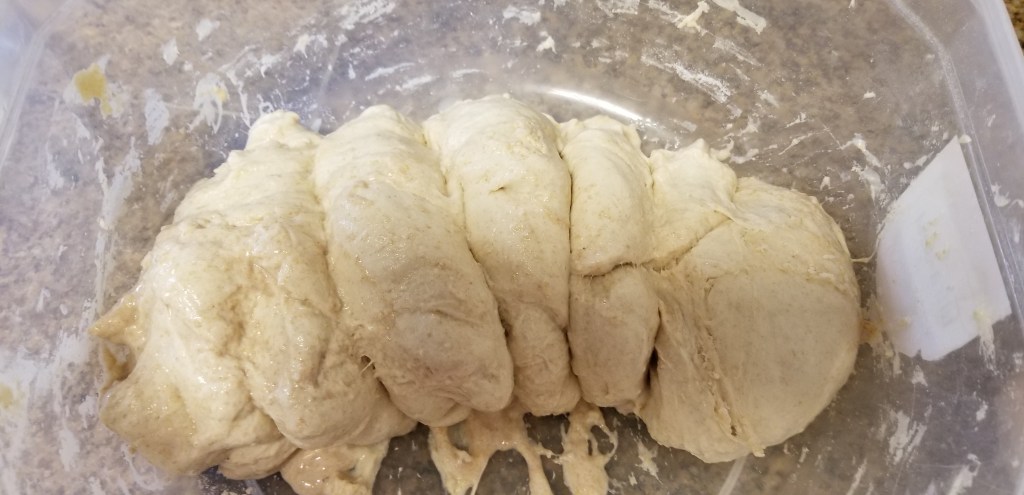
Then sprinkle on the salt and yeast. Then mix the dough using the Pincer Method. Pinch and fold until you no longer feel the grittiness from the salt.
Bulk Fermentation
This is where the dough goes from being an unintelligible mass of flour and water, to a cohesive, smooth, recognizable dough. Fermentation is when the yeast eats the sugars provided from the flour, farts out the carbon dioxide, and the gasses get trapped as bubbles within the gluten strands. This process causes the dough to noticeably rise.
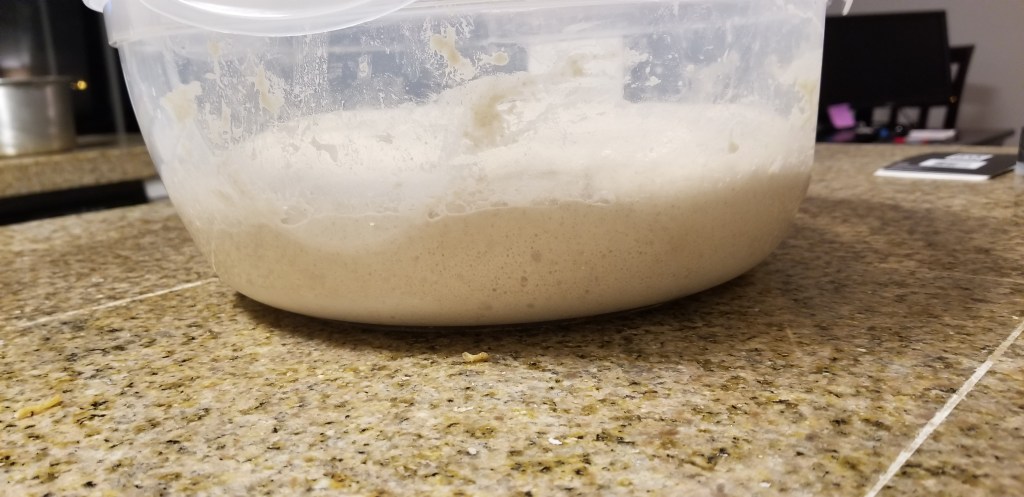
We will be fermenting on the counter for the first 4-5 hours, until almost doubling in volume. During the first 2 hours, perform a series of folds every thirty minutes. This provides more strength to the dough and aids in more gluten development. If you find that your dough is too sticky to fold, just wet your hand. Do not add more flour.
At the end of this 4-5 hours, it should look somewhat like this:
Divide, Shape, and Store
Almost done. Once it is ready, you can do a few things. Technically, you could start rolling out the dough and make the pizza now. But I like to get the best flavor out of this crust. Divide and shape it into two separate balls. Wrap them, and place in the fridge for the night. Again, the longer we let a dough ferment, the better it will taste. Lowering the temperature is another way of slowing the fermentation process. It essentially puts those hardworking yeasty boys to sleep.
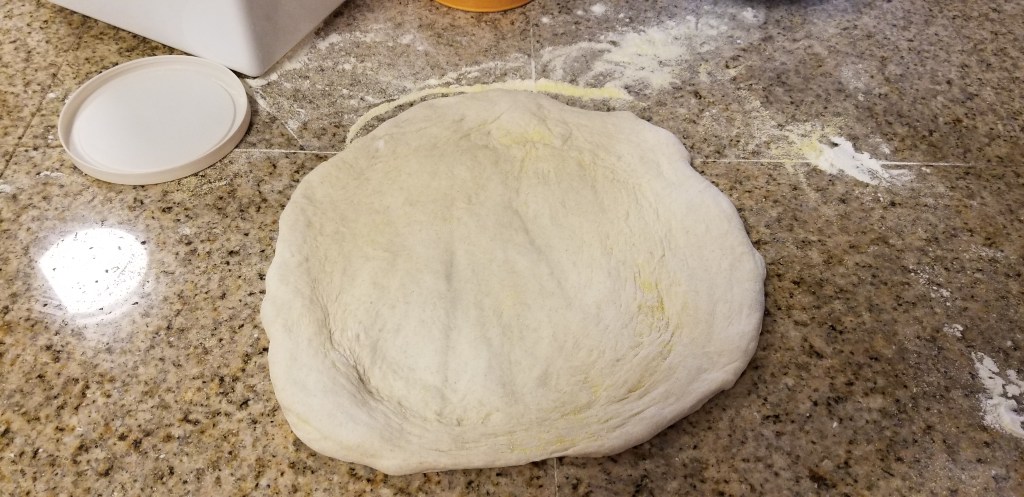
Whenever you are ready, take the dough out of the fridge, and start rolling it out. If you find that it is too tough to work with, let it rest on the counter for 10 minutes for it too warm up. Here is the final result after rolling out!
Some notes…
Since this post is more about the dough, I will not get into the rest of the pizza. But I did want to share one thing. A common mistake of homemade pizza is oven temperature. You want to get that oven as hot as it can go. Our oven gets up to 525 F, so we cranked it. This will give it a golden, crispy, chewy crust. Bonus points if you have a pizza stone. Enjoy!

 Cafe du Montan